
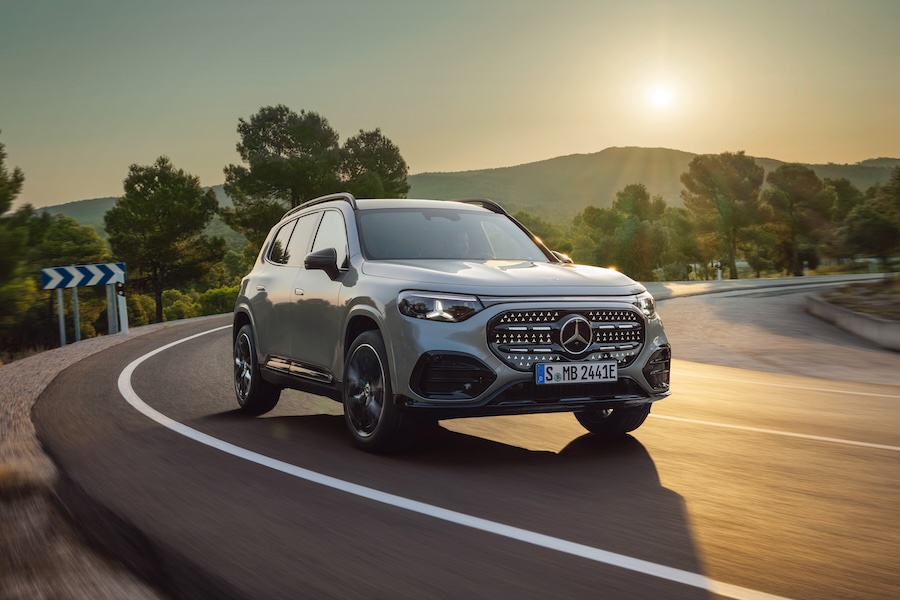
Mercedes-Benz isn’t just building an electric SUV — it’s rethinking how that SUV comes to exist in the first place. The all-new electric GLB comes with a full 360° environmental check, a rigorous lifecycle assessment that measures carbon impact from raw material extraction all the way through end-of-life recycling. For European vehicle owners who care about what their cars actually cost the planet, the numbers are worth understanding.
What a 21% Supply Chain Reduction Actually Means
When Mercedes says it has cut CO₂ emissions by 21% in the supply chain compared to its predecessor, that encompasses every upstream process: mining, refining, component manufacturing and logistics. Achieving that figure requires coordinated pressure across dozens of suppliers in multiple countries. Mercedes accomplished this partly by requiring that key suppliers use renewable energy for production and by reshoring or consolidating transport routes to reduce freight emissions. For a vehicle as complex as the GLB — with hundreds of parts sourced globally — a 21% reduction is not incremental. It reflects a genuine structural shift in how the supply chain is managed.
The Battery Cell Story Is Where It Gets Interesting
Battery production is the single largest carbon liability in any electric vehicle’s lifecycle. The cells require energy-intensive processes to produce, and the raw materials — lithium, cobalt and nickel — carry significant mining emissions. Mercedes has addressed this directly, using reduction measures in cell manufacturing to achieve up to 3 metric tons of CO₂ savings per vehicle in the battery cells alone. That’s the equivalent of roughly 7,500 miles of average gasoline driving, eliminated before the car ever leaves the factory.
The approach includes sourcing battery-grade lithium from suppliers committed to low-emission extraction and ensuring cell production facilities run on certified green electricity. This matters because lifecycle studies consistently show that battery manufacturing accounts for 30–40% of a BEV’s total production emissions.
For GLB owners, the takeaway is straightforward: the environmental case for going electric is now stronger at the point of manufacture, not just at the tailpipe.
Recent Comments