
Volvo vehicles are celebrated for their longevity and safety but they have one specific Achilles’ heel that often catches owners off guard. The Positive Crankcase Ventilation system or PCV is a critical component that manages engine pressure. When this system clogs or fails it causes a domino effect of expensive problems. Staying ahead of this issue is the single most effective way to protect your investment and avoid catastrophic engine damage.
Common Symptoms of a Failing Volvo PCV System
The PCV system’s job is to recirculate gases back into the combustion chamber. When the oil trap or hoses become restricted pressure builds up inside the crankcase. One of the most obvious signs of trouble is a high-pitched whistling or squealing sound while the engine is idling. This noise often disappears when you pull out the oil dipstick because the pressure finally has a place to escape.
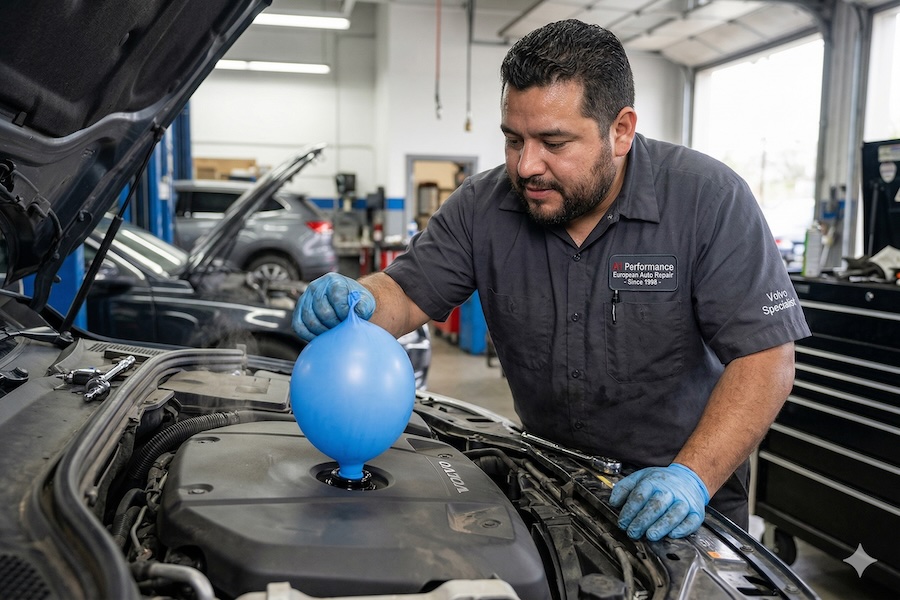
You might also notice oil leaks appearing suddenly. Excessive internal pressure forces oil past various engine seals and gaskets. If you see oil around the cam seals or the top of the engine it is time for an inspection. Another simple check is the “glove test.” Placing a latex glove over the open oil filler neck while the engine runs should result in a slight vacuum. If the glove inflates like a balloon your system is pressurized and failing. Ignoring these signs leads to blown seals and oil-soaked timing belts that require intensive labor to replace.
Proactive Prevention and the A1 Performance Repair Process
Prevention starts with high-quality synthetic oil and regular change intervals. Sludge buildup is the primary enemy of the Volvo PCV system. Short trips that do not allow the engine to reach full operating temperature can also accelerate clogging. We recommend a professional inspection of the system every 60,000 miles to ensure the breather hoses remain soft and the oil trap stays clear.
When we address a failing system at A1 Performance European Auto Repair we do more than just swap a part. Our process involves a comprehensive teardown of the intake manifold to access the oil trap box. We replace the entire breather assembly including the specialized hoses and connectors that often become brittle with age. We also verify that the ports in the engine block are clear of carbon deposits. This thorough approach ensures your Volvo continues to run smoothly without the threat of unexpected oil leaks or internal engine damage. By investing in a PCV service now you avoid the thousands of dollars in labor required to fix blown engine seals later.
Recent Comments