
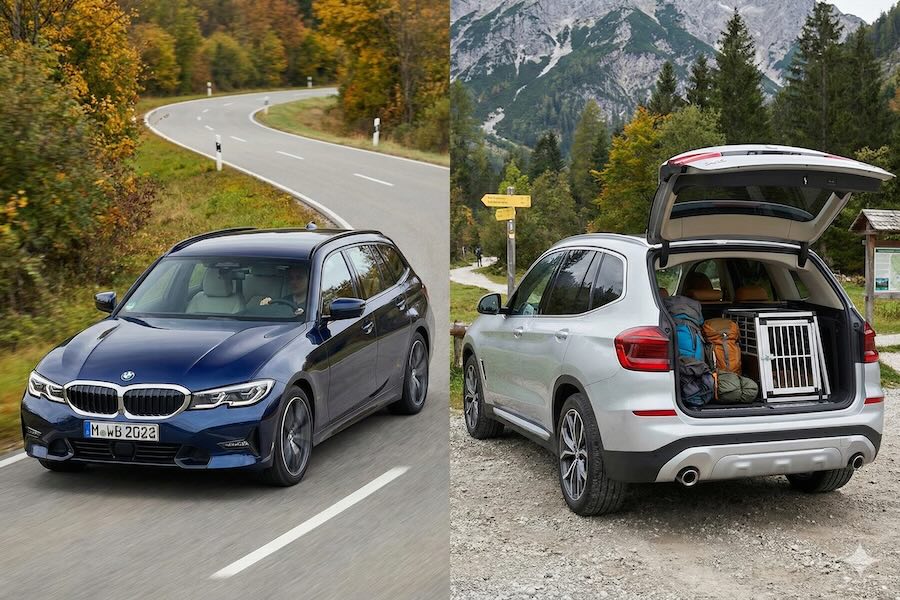
For decades, the station wagon was the undisputed king of family haulers. Today, the SUV reigns supreme in sales. European manufacturers are unique in that they still offer incredible options in both categories. Whether you are looking at a BMW 3-Series Touring versus an X3, or an Audi A6 Avant versus a Q7, the choice often comes down to personal priorities regarding driving dynamics and utility.
Driving Dynamics and Efficiency
If you prioritize a connected, sporty driving feel, the wagon is the clear winner. Because a wagon is essentially a sedan with an extended roofline, it sits much lower to the ground. This lower center of gravity translates to less body roll in corners, sharper handling and a more engaging experience behind the wheel. You feel part of the road, not perched above it.
This lower profile also means better aerodynamics. A wagon will almost always get better fuel economy on the highway compared to its taller, blockier SUV counterpart with the same engine. For high-mileage commuters, this efficiency adds up.
Practicality and Lifestyle Considerations
The SUV’s primary advantage lies in its ride height. The commanding view of the road is a major selling point for many drivers. The higher hip point also makes it easier to get in and out of the vehicle, and it is significantly easier to buckle small children into car seats without bending over.
While SUVs often offer more vertical cargo space, wagons frequently provide a longer cargo floor. This makes them surprisingly better for hauling long items like skis, lumber or flat-pack furniture. The lower roof height of a wagon also makes loading bikes or cargo boxes onto roof racks much less of a chore.
Ultimately, there is no wrong choice. Both European wagons and SUVs offer the exceptional build quality, safety and performance you expect. The best daily driver is the one that fits your specific lifestyle like a glove.


Recent Comments